Allahabad HC orders bailable warrant against DM of Gautam Buddha Nagar
The Allahabad High Court has reprimanded the District Magistrate of Gautam Buddha Nagar for disobeying court orders, directing him to appear in person.
The High Court said the Places of Worship Act does not prevent the State from acquiring religious sites for public purposes and dismissed a petition challenging Varanasi’s Daalmandi road widening project.




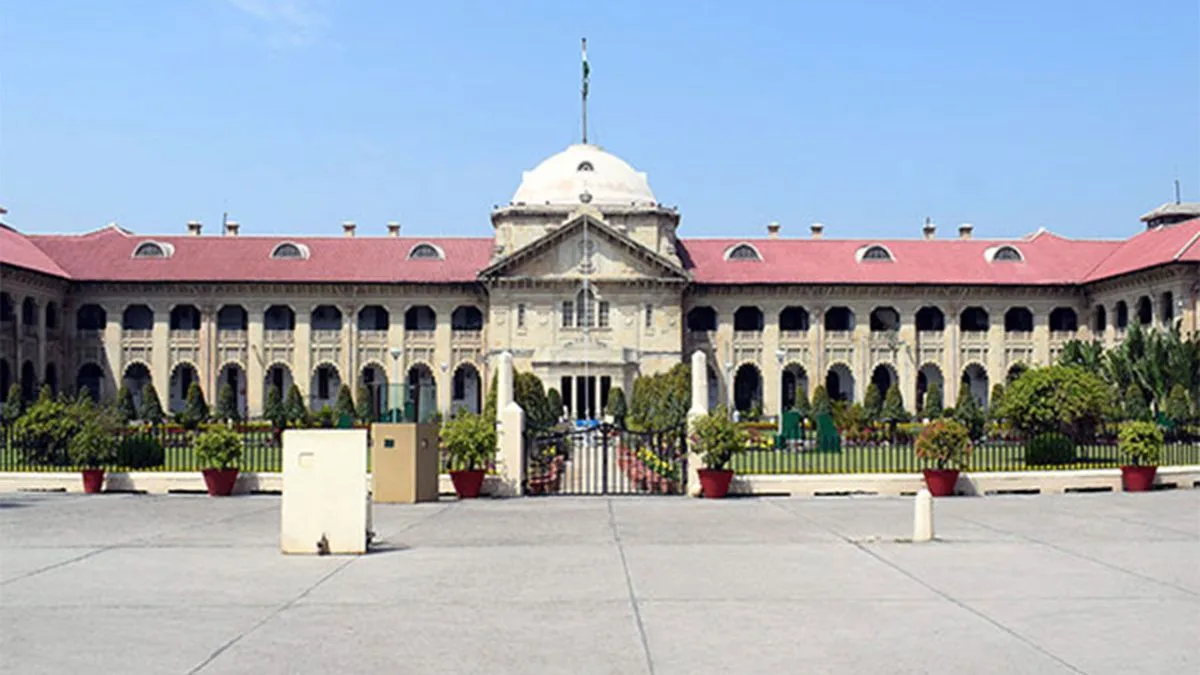
The Allahabad High Court | ANI
The Allahabad High Court has dismissed a petition challenging the proposed road widening and beautification project in Varanasi’s Daalmandi market, holding that the State has the legal authority to acquire even places of worship for a public purpose if the acquisition is carried out in accordance with law.
The Division Bench of Justice JJ Munir and Justice Arun Kumar said the Places of Worship (Special Provisions) Act, 1991, does not prohibit the government from acquiring religious sites for development projects.
Advertisement
The petition was filed by six tenants occupying shops in the Daalmandi market. They sought protection from what they described as forcible eviction and requested the Court to restrain authorities from deploying police or security personnel during the proposed exercise.
Advertisement
The petitioners also opposed the acquisition of six ancient mosques situated along the project route. The petitioners also asked the Court to direct the authorities to consider an alternative route instead of widening the existing road.
The Bench, however, said they were only tenants and had no ownership rights over the properties.
It further observed that the petition combined routine tenancy-related grievances with the sensitive issue of protecting religious places, making the writ petition legally unsustainable.
The Court also noted that the petitioners had approached it without first making a formal representation before the competent authorities, a requirement before seeking a writ of mandamus.
While examining the challenge relating to the six mosques, the Bench said the Places of Worship (Special Provisions) Act, 1991 is intended to preserve the religious character of places of worship and prevent their conversion from one denomination to another.
According to the Court, the legislation does not bar the State from acquiring land, including religious properties, for public purposes.
The Bench relied on the Supreme Court’s judgment in Dr M Ismail Faruqui v. Union of India to reinforce its view that no temple, mosque, church or other place of worship is beyond the State’s power of acquisition, provided the process is carried out in accordance with the law.
The judges said the Daalmandi road widening project was being undertaken within the legal framework and in the larger public interest.
The Court also referred to the Right to Fair Compensation and Transparency in Land Acquisition, Rehabilitation and Resettlement Act, 2013, saying the law contains adequate provisions for compensation and rehabilitation of affected families.
With these findings, the Bench dismissed the petition, saying the tenants had failed to make out a legal case for the relief they had sought.
However, it clarified that the order would not prejudice the rights of the concerned Waqf Board or the Mutawallis of the six mosques if they choose to pursue legal remedies before the appropriate forum.
Advertisement